
Cappadocia Travel Guide for Photo-Lovers
How to get there, where to stay, what to eat, which valleys to wander — a comprehensive, photography-focused travel guide for first-time visitors to Cappadocia.

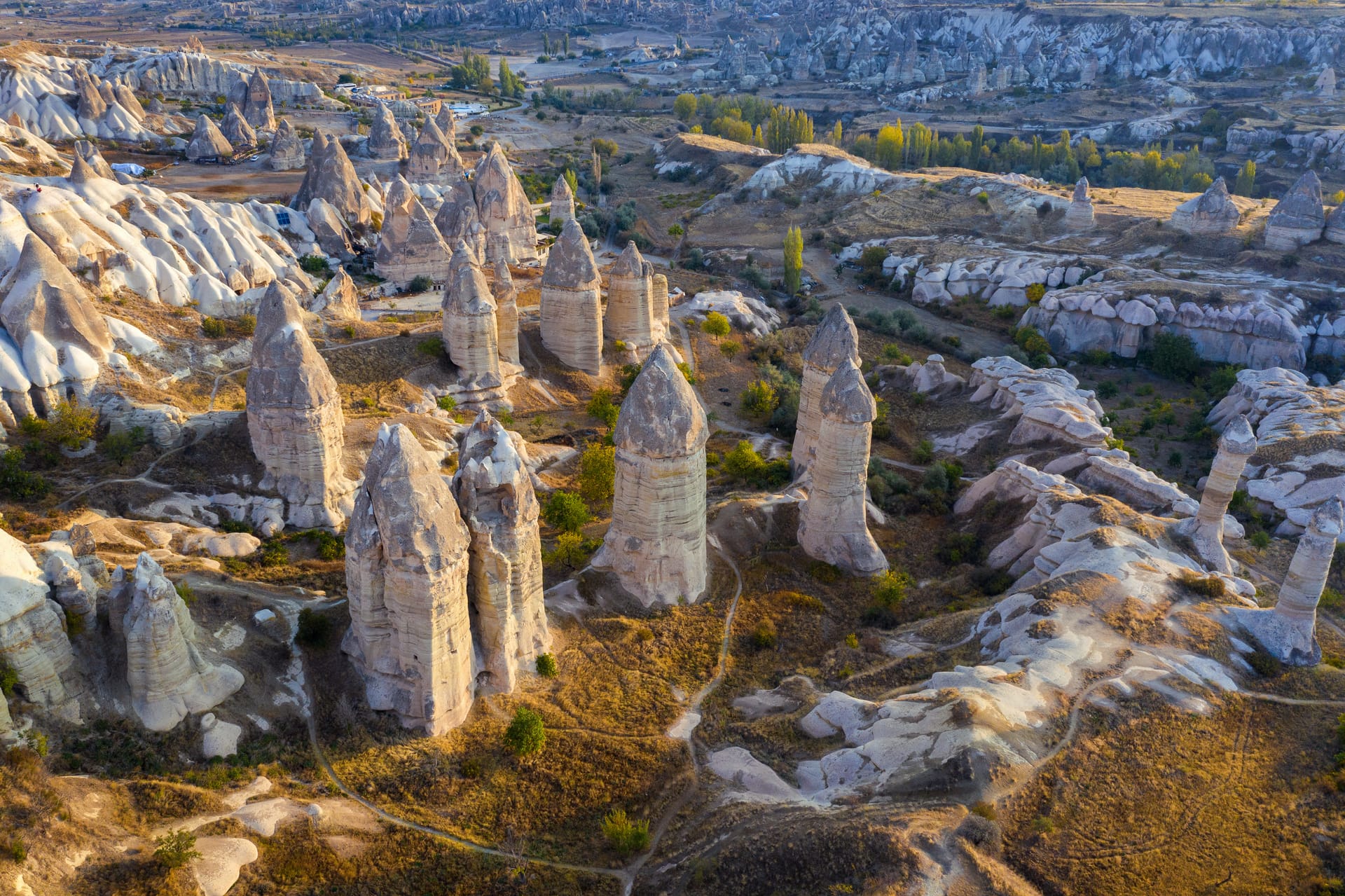
Some destinations disappoint. Cappadocia doesn't. The first time you see the fairy chimneys from a plane window — or spot them rising in the distance from a bus — you understand that the photograph you saw years ago was real. Real, and far larger than you imagined.
This guide was written for those who want to discover Cappadocia through a photography-focused lens. It blends practical travel information with insights on the right light hours, the right locations, and the right preparation. If this is your first visit, let this be your starting point. If you're also planning to join one of our photo experiences during your time here, what you find will give you everything you need to take the right step.
Getting to Cappadocia
Cappadocia is a region, not a single city. The most popular base towns are Göreme, Ürgüp, Uçhisar, and Avanos. There are several ways to arrive.
By Air
The most practical and time-efficient option. Two airports serve the region:
- Kayseri Erkilet Airport (ASR): Around 1 hour from the Cappadocia region. Regular flights from Istanbul, Ankara, and other major cities.
- Nevşehir Kapadokya Airport (NAV): Approximately 40 minutes from Göreme. Fewer daily flights than Kayseri, but more convenient positioning.
From the airport, transfer options include shuttle buses (havas/servis), private transfers, and car rental. If you've booked a sunrise session, arriving the night before is critical — an early morning start demands a real night's sleep.
By Bus
Overnight buses run from Istanbul to Cappadocia (Göreme, Ürgüp, or Nevşehir). The journey takes approximately 10–12 hours. A budget-friendly option for those who enjoy experiencing Turkey overland. Buses typically arrive at Nevşehir bus terminal in the early morning; a short minibus ride connects to Göreme.
By Car
Approximately 4 hours from Ankara, 7–8 from Istanbul. Renting a car is ideal for those who want to explore the region at their own pace and access remote valleys without scheduling constraints. Having your own vehicle in Cappadocia opens up trailheads, valley edges, and small villages that group tours rarely reach.
Best Time to Visit Cappadocia
Every season in Cappadocia offers photographers something distinct. But certain periods stand out both visually and practically.
October and November — The Golden Season
Widely considered the year's finest period by photographers, this is when Cappadocia's color palette reaches its deepest tones. Yellow, amber, and copper hues layer over the volcanic rock. The air cools, balloon flights regularize, and visitor numbers drop from the July–August peak. Sunrise light carries a golden quality; sunsets become something almost otherworldly.
April and May — Blooming Spring
As the region greens and flowers, Cappadocia takes on a softer expression. Almond blossoms, red poppies in the fields, and broad green plateaus are the photographic signature of this season. Balloon flights reach their highest frequency of the year. April is one of the most competitive booking periods — early planning is strongly recommended.
Winter (December–March) — Snow and Silence
When snow falls, Cappadocia becomes something else entirely. This is the rarest and most powerful atmosphere in any photograph of the region. Snow crowning the fairy chimneys opens a different dimension. Tourist numbers are minimal; silence becomes almost tactile. There are risks: balloon flights may cancel frequently, some locations become inaccessible. But with the right preparation, winter Cappadocia is incomparable.
Summer (July–August)
Hot, but alive. Midday temperatures can exceed 35°C, making the middle hours challenging for outdoor sessions. But the windows between 5–8 AM and 7–9 PM remain magical. If you're shooting in summer, sunrise sessions offer cool air and extraordinary light. Long days provide scheduling flexibility that other seasons don't.
Where to Stay: Cave Hotels
Cappadocia's accommodation options are as distinctive as the destination itself. The region offers everything from budget guesthouses to luxury boutique hotels. But if photography is your motivation, a cave hotel experience deserves a place on your list.
What Is a Cave Hotel?
Cappadocia's soft volcanic rock has been carved into living spaces for thousands of years. Today, a portion of these spaces have been transformed into boutique hotels that preserve the original rock texture. A cave room means basalt walls, vaulted ceilings, small niche windows, and a deep, settled silence.
Best Areas for Photography
- Göreme: Central location. The densest point for balloon observation. Multiple viewpoint terraces are reachable on foot in the early morning.
- Ürgüp: A quieter, more residential feel. Boutique cave hotels, wine tasting bars, and Cappadocian cuisine concentrate here. See our Ürgüp old town photography walk guide.
- Uçhisar: Close to Cappadocia's highest point. Offers panoramic views over the valleys during early morning fog.
- Çavuşin and Ortahisar: Fewer visitors, more authentic atmosphere. Rock-carved houses and historic village fabric remain largely intact here.
Cave hotel terraces, rooms, or pools make exceptional backdrops for our cave hotel photography experience. An early booking secures both your preferred accommodation and your shoot setting in one move.
Must-See Locations in Cappadocia
Cappadocia's geography provides a specialized catalog for photography-focused exploration. The locations below stand out for both accessibility and visual potential.
Göreme Panorama Viewpoint
Arrive early — before the tour buses begin — and you can watch the balloon launch from here against the valley below. The surrounding rock formations create a natural panoramic frame. Be there 30 minutes before sunrise.
Kızılçukur (Red Valley)
When the last light of the day hits these red rock formations, the valley appears to burn from within. One of the purest golden hour experiences available anywhere in Cappadocia. The trails accommodate both walking and drone work.
Love Valley
The column-shaped fairy chimneys that rise along the trail through this valley create dramatic shadows and silhouettes in morning light. A favored balloon flight corridor in the mornings, which adds a living backdrop to early sessions.
Paşabağ (Monks Valley)
Home to Cappadocia's most iconic fairy chimney cluster. Multi-headed, mushroom-shaped formations define this valley. Particularly striking in the soft afternoon light that reaches the valley floor in the hours before sunset.
Uçhisar Castle
360-degree panoramic views from Cappadocia's highest point. Climbing at first light to watch the morning mist settle over the Göreme plain below is an experience few visitors arrive early enough to witness.
Devrent Valley
Known as Cappadocia's "imagination valley," this area offers abstract silhouettes formed by natural rock erosion. Depending on the angle of light and the eye of the photographer, these formations suggest different shapes with every visit.
Local Food and Culture
Cappadocia is not only a visual experience — it's a fully sensory one. And the region's cuisine holds its own against the landscape.
Highlights of the Cappadocian Table
- Testi Kebabı (Pottery Kebab): Slow-cooked meat and vegetables sealed in a clay pot, unique to Cappadocia. The presentation — breaking open the sealed pot at the table — becomes a small ritual in itself.
- Mantı: Beloved across Turkey but served in Cappadocia with a distinctive yogurt and red pepper butter sauce that elevates the familiar.
- Cappadocian Wine: The region has one of Turkey's most established viticulture traditions. Wine tasting in cave cellars around Ürgüp is both enjoyable and culturally grounding.
- Village Breakfast: The Turkish breakfast spread — local cheese, tomatoes, peppers, fresh herbs, honey, cream — fills the table completely. Returning from a sunrise shoot to this is how a morning should end.
Cultural Layers
Cappadocia is a geography built from the layered accumulation of Christian, Seljuk, Ottoman, and Turkish cultures. Underground cities (Derinkuyu, Kaymaklı), rock-carved churches (Göreme Open Air Museum), pottery tradition (Avanos), and carpet weaving culture — each of these offers rich material for documentary-minded photographers too.
Day Trip Ideas
Using Cappadocia as a base and planning day trips to surrounding areas is an excellent way to broaden your experience.
Avanos Pottery Village
Situated on the banks of the Kızılırmak River, Avanos is home to Turkey's most storied pottery tradition. Our Avanos pottery village guide gives you all the detail you need to plan this visit. Watching master potters shape clay by hand, and exploring the historic underground galleries, is both a photographic and cultural destination in one.
Ihlara Valley
This deep canyon extending into Aksaray province reveals a different face of Cappadocia — rock-carved churches and a lush valley floor. A combination of natural hiking and historical texture. Photographers are drawn particularly to the perspectives looking up from within the canyon walls.
Tuz Gölü (Salt Lake)
Heading westward from Cappadocia brings you to Turkey's largest salt lake. In autumn and winter, salt crystals catch the sunlight and glitter across the flat expanse. This location is also a backdrop for our Salt Lake photography experience — the minimalist aesthetic of the white flats gives photography a dimension that nowhere else in the region can replicate.
Photography-Specific Tips
If you're approaching Cappadocia with a photographer's eye, a few technical and practical points will directly shape your experience.
Best Light Windows
The blue hour that begins 30 minutes before sunrise, followed by the golden hour — this window (typically 5:30–7:30 AM) offers Cappadocia's most magical light. The middle of the day (10:00 AM–4:00 PM) produces harsh, flat light that's challenging for portraits. The evening golden hour, starting about an hour before sunset, creates a dramatic light environment especially in valleys like Kızılçukur and Güllüdere.
Framing and Composition
If you're shooting wide angle, find a foreground element — a flower, a rock surface, a human silhouette. This builds depth and scale. With a telephoto, use the compression effect to bring balloons and fairy chimneys together in a single frame. For night photography, Cappadocia's dark skies provide a rare canvas for Milky Way work.
Drone Use
Drone use in Turkey is subject to specific regulations. Some areas of Cappadocia are protected and unauthorized flights are prohibited. If you're shooting with us, we'll brief you on permit requirements and suitable locations. Our drone video service operates within this legal framework, managed by our experienced team.
Photo Permits
In some protected areas such as the Göreme Open Air Museum, a special permit may be required for professional equipment. Casual photography with light personal equipment generally does not require additional permits. For certainty, we recommend checking with local authorities in advance.
Combining Your Trip with a Photoshoot
The ideal approach to combining travel and photography is to dedicate your first or second day in Cappadocia to the session. This is the most advantageous choice both in terms of energy and weather flexibility.
Sample 3-Day Plan
- Day 1 — Arrival and Orientation: Afternoon arrival. Check in. Short walk through central Göreme. Sunset viewing from the panorama terrace. Testi kebabı dinner at a local restaurant.
- Day 2 — Shoot Day: 4:30 AM wake-up, balloon sunrise session. Afternoon rest. Evening stroll through Ürgüp's old bazaar.
- Day 3 — Valley Day: Paşabağ, Love Valley, and Uçhisar Castle. Afternoon pottery visit in Avanos. Final evening wine tasting.
For a longer stay, our 3-day Cappadocia itinerary guide offers a full planning framework. The Cappadocia in four seasons photography guide is also a valuable resource for seasonal visit planning.
Practical Travel Notes
- Public transport within Cappadocia is limited; car rental or tour minibuses are more practical
- Inter-town distances may look short on a map, but trails, elevation changes, and terrain can add significant time
- Monitor the weather daily; a morning check before any early start is essential, especially on balloon days
- Credit cards are widely accepted in shops; carry cash for markets and smaller establishments
- Local guides and boutique hotel staff can point you toward "hidden" spots that won't appear in any travel article
Frequently Asked Questions
I'm visiting Cappadocia for the first time — how many days should I stay?
A minimum of 3 nights, ideally 4–5. In 3 nights you can cover the key locations and execute a photography plan. Five nights gives you weather flexibility and room for deeper exploration. Cappadocia moves at a slow rhythm — give yourself time to match it.
What photography subjects does Cappadocia do best?
Balloon sunrises, portraits with fairy chimneys, valley sunsets, cave hotel architecture, and close-up rock texture work are the most commonly explored subjects. Beyond these, Cappadocia's local culture — pottery, carpet looms, village breakfasts — offers rich material for documentary and lifestyle photography.
Is Cappadocia safe for photographers and solo travelers?
Yes. The region has a deeply hospitable culture toward international visitors. It is safe for solo travelers, couples, groups, and solo female travelers. See our Cappadocia safety guide for detailed context.
Cappadocia or Santorini — which should I choose for a photoshoot?
Both are unique destinations with completely different characters. Santorini foregrounds Aegean aesthetics — white-blue architecture, sea views, and Mediterranean light. Cappadocia feels like another planet — deep, dark, geological, and mythological. For hot air balloons, flying dress photography, and fairy chimney portraits, Cappadocia has no equivalent anywhere in the world. Our comparison guide explores this question from multiple angles.
Is visiting Cappadocia really worth it for photography?
If you carry both a love of travel and a love of photography, the answer is beyond debate. Cappadocia offers an experience that transforms you — visually and emotionally. Our article Is Cappadocia Worth Visiting for Photography? explores this in depth.
How much should I budget for a trip to Cappadocia?
Cappadocia accommodates a wide range of budgets. Mid-range cave hotels run €80–€200 per night; local restaurants average €15–€30 per person. Luxury boutique options can exceed €300 per night. A photography session budget starts from €120 depending on the experience and any additional services.
Cluster Articles: Go Deeper on Every Topic
This guide maps the landscape. For a deeper look at each dimension of your trip, these articles are worth your time:
- How to Get to Cappadocia from Istanbul
- 3-Day Cappadocia Itinerary for Photo-Lovers
- Best Cave Hotels in Cappadocia for Photoshoots
- Cappadocia in Four Seasons: Photography Guide
- Shopping and Souvenirs in Cappadocia
- Local Cuisine Guide for Cappadocia Visitors
- Cappadocia Hidden Gems: Off the Beaten Path
- Avanos Pottery Village Day Trip
- Is Cappadocia Worth Visiting for Photography?
- Cappadocia vs Santorini for a Photoshoot
- Is Cappadocia Safe for Tourists?
- Urgup Old Town: Photography Walk Guide
Want to shoot at these stunning Cappadocia locations? Browse our experience collection and find the session that speaks to you. Explore Experiences | Get in Touch
Explore Related Experiences
Your story begins in Cappadocia
We'll craft something timeless — quiet, elegant, and cinematic.
Explore Experiences