
Golden Hour vs Blue Hour in Cappadocia: The Complete Light Guide
Two magical windows of light, two entirely different atmospheres. Discover which hour to choose, the best locations for each, seasonal timing tables, and outfit recommendations.

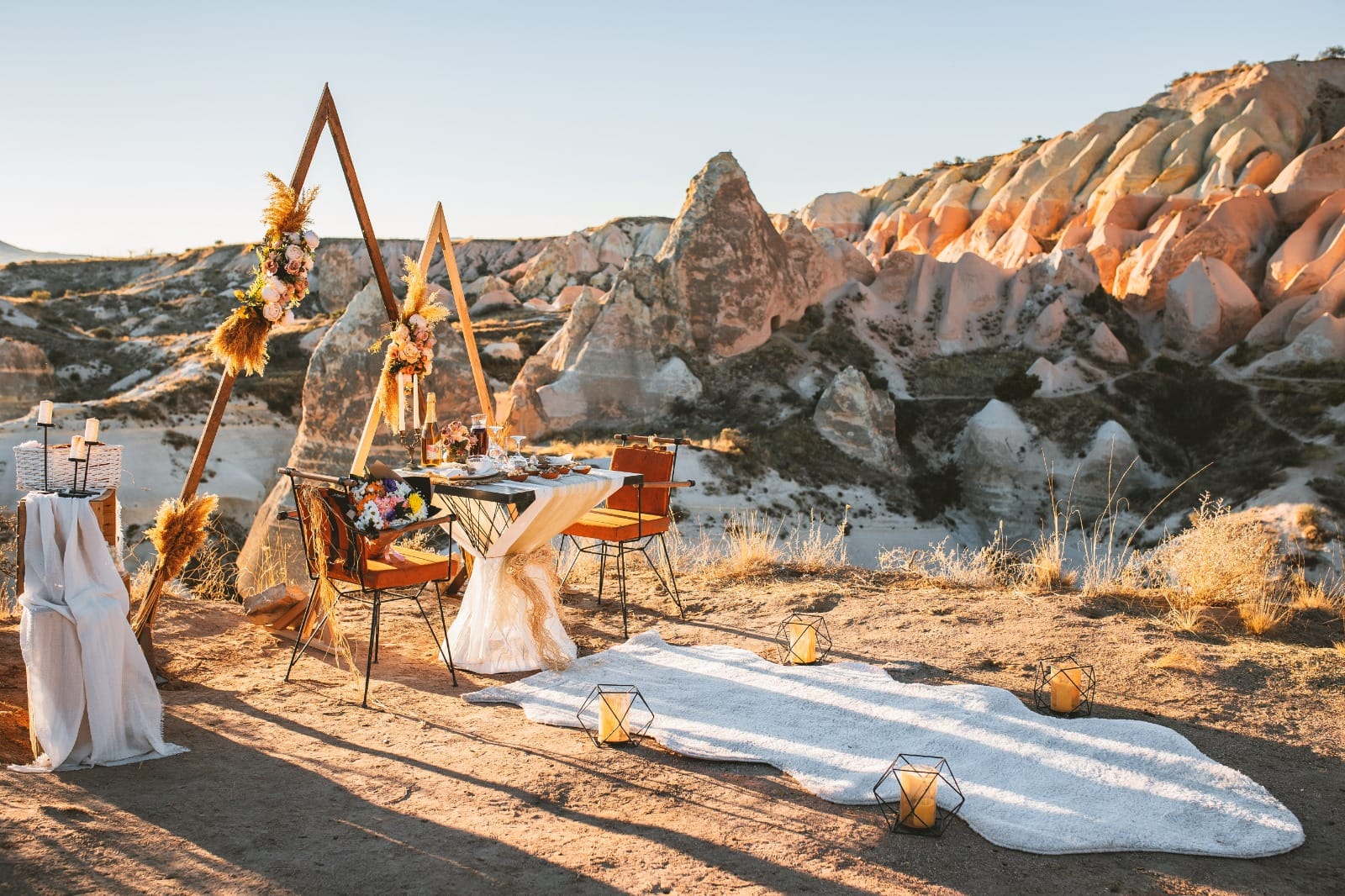
Light in Cappadocia is never static. It shifts every hour, sometimes every few minutes — its color, its angle, the length of shadows it throws across the valley walls, the warmth it deposits on everything it touches. Within that constant movement, two windows are exceptional. Photographers wake before dawn for one. They sit and wait through the dinner hour for the other.
Golden hour and blue hour: adjacent in time, fundamentally different in character. Knowing which one you're drawn to — and why — shapes the entire mood of your session. As you explore our experience options, this understanding helps you plan not just a date but a specific kind of light.
For a complete overview, see our Balloon Sunrise Photography in Cappadocia: Complete Guide.
What Is Golden Hour?
Golden hour is the period when the sun is low on the horizon — either just after rising or just before setting — and its light travels horizontally through the atmosphere at an oblique angle. In the morning, this window lasts roughly 20–45 minutes after sunrise. In the evening, it begins 30–60 minutes before sunset.
During this time, the light does something it cannot do at any other hour: it saturates every surface with amber and gold. The volcanic tuff of Cappadocia's rock formations turns honey-yellow. Skin tones acquire a warmth that no studio light can replicate. Shadows stretch long and form patterns. The entire landscape becomes warm and alive.
Why Cappadocia Makes Golden Hour Special
Cappadocia's geology — volcanic tuff, limestone strata, orange clay soil — absorbs and amplifies golden light. The region appears on almost every list of the world's best golden hour photography destinations, and with good reason. Güllüdere (Rose Valley) is where this effect peaks: the fairy chimneys appear almost lit from within, as though the stone itself is generating light. It is a quality that editing cannot fabricate and that only this kind of light, in this specific landscape, produces naturally.
What Is Blue Hour?
Blue hour is the brief period just after sunset or just before sunrise, when the sun sits below the horizon but still illuminates the atmosphere indirectly. The result: a sky that deepens into rich blue, distributed evenly across the scene without a single point-source shadow. Evening blue hour typically runs 10–40 minutes after sunset. Morning blue hour occurs 20–40 minutes before sunrise.
During blue hour, direct sunlight is absent. The light is diffused from the entire sky simultaneously, creating an evenness that eliminates harsh shadows entirely. The colour it casts is cool — ranging from deep navy to cobalt — and it renders everything within it as part of the same palette.
The Mood of Blue Hour
Where golden hour is warm, energetic, and romantic, blue hour is still, contemplative, and cinematic. The photographs it produces carry a quality that resembles film stills — as if time has been suspended and the scene is not a moment but a permanent state. In Cappadocia, blue hour catches the fairy chimneys in that ambiguous territory between night and day, and the result is not surreal but trans-real: more real than ordinary light, somehow.
Visual Differences: Side by Side
Colour Palette
- Golden hour: Amber, warm orange, deep gold, rose pink. Gradients across the sky are dramatic and the warmth accumulates across every surface.
- Blue hour: Deep navy, cobalt, indigo, cool steel blue. The sky reads as a single deep tone with subtle variation — monochromatic but richly textured.
Shadows and Contrast
- Golden hour: Long, soft shadows that define form and texture. Contrast is present but not harsh. Facial structures are shaped beautifully with directional light.
- Blue hour: Minimal or no direct shadows. Contrast comes from the global difference between subject and sky. Faces are evenly lit, smooth, and dimensional.
Emotional Register
- Golden hour: Warm, joyful, romantic. The universal first choice for wedding and couple photography.
- Blue hour: Quiet, epic, existential. Produces the strongest results in solo portraits and in couple images where depth of feeling is more important than warmth.
Best Locations in Cappadocia for Each Hour
Golden Hour Locations
Güllüdere (Rose Valley): The undisputed golden hour location in Cappadocia. The rough texture of the valley walls catches the low light from every angle. At sunset, the rock takes on a colour between amber and fire that transforms even technically average photographs into something extraordinary.
Kızılçukur (Red Valley): Adjacent to Güllüdere and equally intense in its response to golden light. The trail connecting the two valleys offers the rare advantage of multiple position changes within a single session — each turn in the path offers a new composition.
Uçhisar Silhouette: The castle outline against a golden sky, with a subject positioned in contre-jour (backlit), produces one of Cappadocia's most iconic portrait styles. The light radiating around the castle edge creates a natural rim that photographs as intentional.
Blue Hour Locations
Göreme Panorama Terrace: At evening blue hour, looking down into the valley, the fairy chimneys rise as dark silhouettes against a rich, deep-blue sky. Any remaining balloon activity creates small warm points in the frame — a combination of cool blue and warm amber that is compositionally exceptional.
Upper Love Valley: The narrow passages of this valley take on a different kind of depth in blue light. The column-like fairy chimneys read as stronger, more architectural silhouettes against the blue sky than at any other hour.
Çavuşin Village Edge: An undervisited position that rewards early risers. At morning blue hour, the first balloon burners appear as glowing points against the steel-blue pre-dawn sky — one of Cappadocia's most dramatic and least photographed combinations.
Which Experiences Work Best with Each Hour
The type of session you're planning also informs the right hour choice:
- Balloon sunrise session: Both hours serve this experience. Morning blue hour catches the burners dramatically against dark sky; golden hour follows with warmth and colour. The ideal balloon session spans both.
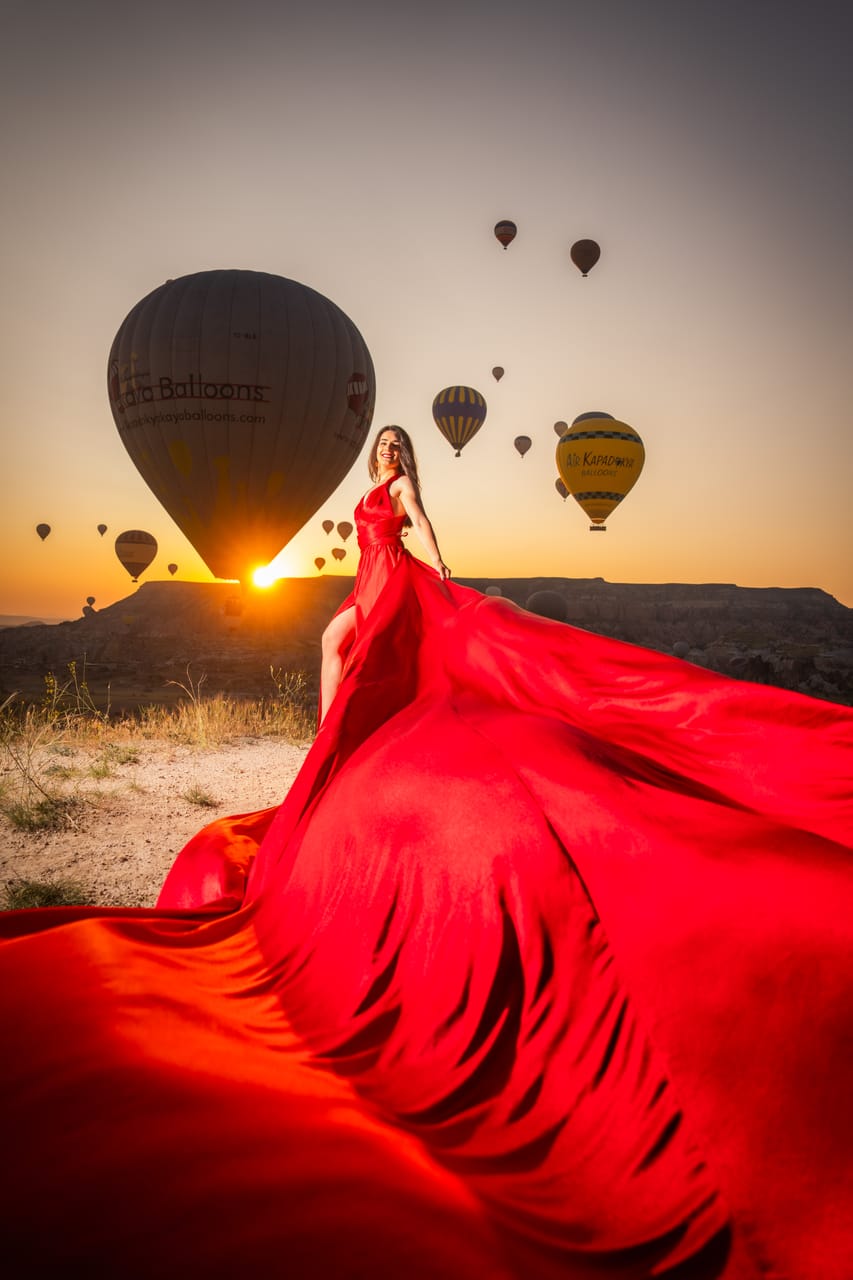
- Flying dress experience: Golden hour is the clear preference. The interaction between light and flowing fabric reaches its highest point in warm directional light.
- Couple portrait: Both work, but for different emotional registers. Warm, joyful couples → golden hour. Quiet, cinematic couples → blue hour or both.
- Elopement: Golden hour for ceremony and portraits; blue hour ending creates a cinematic final act.
- Solo and content creator shoots: Blue hour produces more editorial and epic content. Golden hour has broader social media appeal through its warmth and accessibility.
Seasonal Timing Table
Cappadocia's golden and blue hour windows shift significantly across the year. The table below gives approximate times — actual times may vary by a few minutes day to day.
Morning Blue Hour and Golden Hour
- Winter (Dec–Feb): Blue hour ~06:45–07:15, Golden hour ~07:15–08:00
- Spring (Mar–May): Blue hour ~05:30–06:00, Golden hour ~06:00–06:45
- Summer (Jun–Aug): Blue hour ~04:45–05:15, Golden hour ~05:15–06:00
- Autumn (Sep–Nov): Blue hour ~05:30–06:00, Golden hour ~06:00–06:45
Evening Golden Hour and Blue Hour
- Winter: Golden hour ~16:00–16:45, Blue hour ~16:45–17:15
- Spring: Golden hour ~18:30–19:15, Blue hour ~19:15–19:45
- Summer: Golden hour ~19:30–20:15, Blue hour ~20:15–21:00
- Autumn: Golden hour ~17:30–18:15, Blue hour ~18:15–18:45
Outfit Colour Recommendations by Light
Your choice of hour should also influence your outfit palette. Different light wavelengths render different colours differently.
For Golden Hour
- White and cream — brilliant and warm in amber light
- Terracotta, copper, deep burgundy — tonal harmony with the light itself
- Pale yellow and peach — tone-on-tone depth effect
- Avoid: cool blues, greys, black (these interrupt the warmth of the scene)
For Blue Hour
- Black and deep navy — strong, clean silhouette against the blue sky
- Silver and metallic — reflective in cool light, adds drama
- Deep purple and forest green — harmonise with the blue register
- Avoid: very light colours (risk of losing detail against bright sky)
For a more complete outfit guide by season and experience type, see our What to Wear guide. For help choosing where to shoot, our Best Photo Locations in Cappadocia covers every major spot by light quality and mood. For deeper technical perspective on how we approach Cappadocia's light, our Behind the Lens article is a good next read.
Frequently Asked Questions
How long does golden hour last in Cappadocia?
In the mornings, roughly 20–45 minutes after sunrise. In the evenings, 30–60 minutes before sunset. Blue hour runs approximately 15–30 minutes at each end of the day. These windows are shorter in winter (lower sun angle = faster transitions) and longer in summer. Your photographer will schedule your session to arrive before the window opens — because by the time the best light is visible, you need to already be in position.
Which hour is better for balloon photography?
The most dramatic balloon images are captured in the overlap between morning blue hour and golden hour. The balloon burners photograph as vivid orange against the deep blue pre-dawn sky — a contrast that disappears once golden hour brightens the overall scene. If you can only choose one, blue hour gives you the most arresting single image. If you want a richer, more varied gallery, plan a session that spans both.
Does golden hour work on cloudy days?
Yes — and in some conditions, better. Thin cloud cover diffuses direct sunlight into a natural softbox effect, evening out shadows and creating flattering, gentle light. Heavy overcast eliminates golden hour entirely. Partial cloud — especially in autumn and spring — can produce extraordinary sky gradients and colour effects that clear days don't offer. An experienced photographer uses these conditions rather than waiting them out.
Can I experience both hours in the same session?
Yes, and for longer sessions we plan this deliberately. An evening session that begins in golden hour and finishes in blue hour gives you two completely different atmospheric registers within a single shoot. For morning balloon sessions, the structure runs naturally the other way: blue hour first (with balloon burners), transitioning into golden hour as the sun rises. Our Sunrise vs Sunset Photoshoot comparison explores this further from a planning perspective.
Ready to begin your Cappadocia story? Share your dates and the mood you're looking for — we'll plan the location, timing, and light together. Start Planning or message us on WhatsApp.
Explore Related Experiences
Your story begins in Cappadocia
We'll craft something timeless — quiet, elegant, and cinematic.
Explore Experiences